Why the Jacket Hem Does More for Petite Leg Line Than the Trousers Do
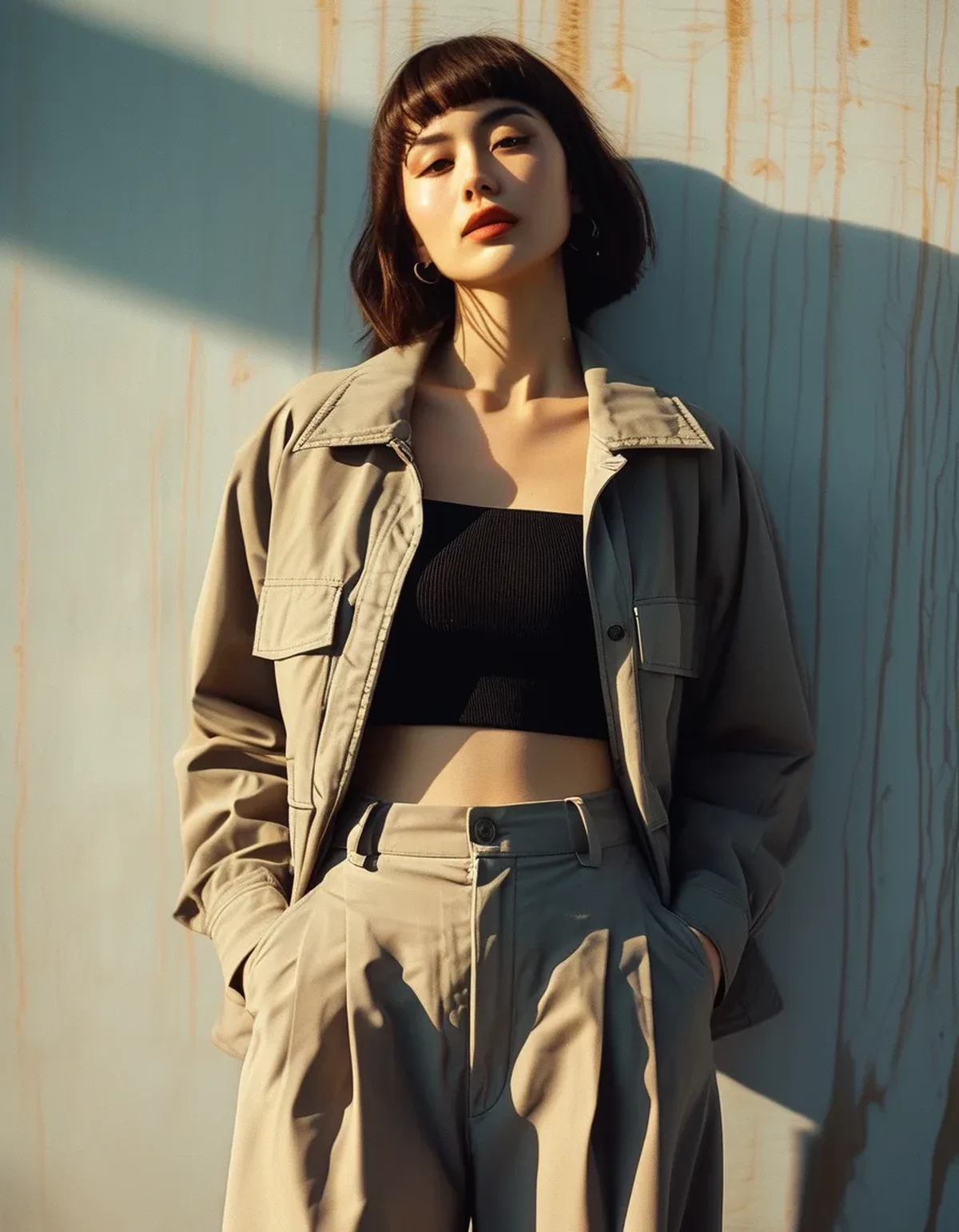
Quick Answer: The jacket hem is the highest horizontal line on the lower half of your body, and the eye uses the highest available break to judge where the leg begins. Trousers can only affect the line from the waist down; a jacket sets the reference point above them. A cropped jacket ending at or above the natural waist implies a longer leg regardless of what the trousers are doing, while a jacket ending at the widest hip caps the leg at its worst point and cannot be undone by anything below it.
Most petite styling advice starts at the waistband. That is one line too low.
The decision is made higher up.
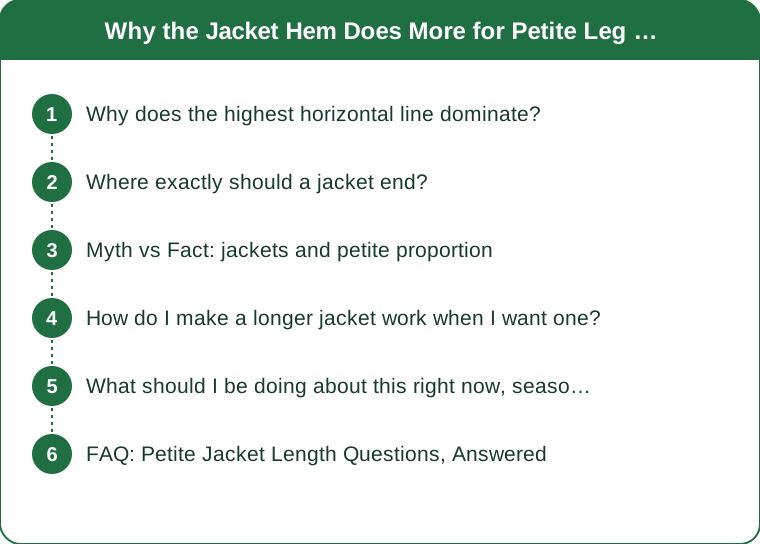
Why does the highest horizontal line dominate?
Because of how the eye assembles proportion.
When you look at a figure, you do not measure anything. You identify boundaries — places where colour, texture or shape changes — and you read the segments between them.
The leg, visually, is understood as the segment running from the lowest clear upper-body boundary to the floor. If a jacket ends at mid-hip, that is where the eye places the top of the leg segment, regardless of where the actual hip joint is and regardless of the trouser rise underneath.
This is why a high-rise trouser can be almost entirely wasted. You raised the waistband and then covered it with a jacket that redrew the line lower. The trouser’s contribution only becomes visible when the jacket is not overriding it.
It also explains a common frustration: an outfit that looks proportionally excellent indoors and completely different with a coat on. The coat added a new, lower, stronger horizontal, and everything underneath stopped mattering.
The hierarchy of horizontal lines, strongest first:
- The outermost layer’s hem — coat, then jacket, then cardigan.
- The waistband or top hem, if visible.
- The trouser hem at the ankle.
- Shoe and sock lines.
Work top-down rather than bottom-up, and the whole thing gets easier.
What if I want to wear a longer jacket?
There are ways, and they are covered further down. The rule is not never — it is know what you are paying and compensate deliberately.
Where exactly should a jacket end?
There are three lengths that work on most petite frames and two that consistently do not.
Works: at or just above the natural waist. A cropped jacket, a bolero, a shrunken blazer. This is the strongest option, because it puts the boundary at the highest plausible point and gives you the maximum implied leg. It also reads as deliberate rather than as an accident of fit.
Works: at the hip bone, just where the hip begins to widen. This is the classic blazer length and it is safe on most frames as long as it stops before the widest point.
Works: genuinely long, well below the widest hip — mid-thigh or lower. A long line coat worn open creates two strong vertical lines and the hem is far enough from the hip that it stops competing. This is why a full-length coat can be more flattering than a mid-length one, which is counterintuitive and reliable.
Does not work: at the widest point of the hip. The single worst length, because it doubles the emphasis — a horizontal line placed exactly at the widest horizontal measurement.
Does not work: mid-thigh, in a structured fabric. It cuts the leg roughly in half, which produces two equal segments and reads as short. The eye finds equal division unflattering in nearly every context.
A practical measuring approach: stand in front of a mirror with your hands at your sides. Note where your hip is widest. Any jacket ending within a few centimetres of that point is the one to avoid, whatever else is right about it.
Myth vs Fact: jackets and petite proportion
Myth: Petite frames should only wear short jackets. Fact: Short works and genuinely long works. It is the middle lengths, particularly at the widest hip, that cause the problems. A long coat worn open is one of the strongest lengthening tools available.
Myth: A long coat swamps a smaller frame. Fact: A long coat with the wrong volume swamps a smaller frame. Length and volume are different variables. A long, narrow coat lengthens; a long, wide coat with dropped shoulders overwhelms.
Myth: Buttoning up looks neater. Fact: Buttoning creates a closed shape with a strong hem line and removes the vertical lines that an open coat provides. Open is nearly always the more lengthening choice, which is inconvenient in December and worth knowing.
Myth: Trousers do most of the work in leg line. Fact: They do the work only when nothing above them is redrawing the boundary. In a coat-wearing season, the outer layer dominates.
Myth: Cropped jackets are only for warm weather. Fact: A cropped wool or quilted jacket over a longer knit is a standard autumn combination and it preserves the high boundary that a mid-length coat destroys.
Myth: If it fits well it will look right. Fact: Fit and proportion are separate. A perfectly tailored jacket ending at the widest hip fits beautifully and shortens you, and no amount of tailoring changes where it ends.
How do I make a longer jacket work when I want one?
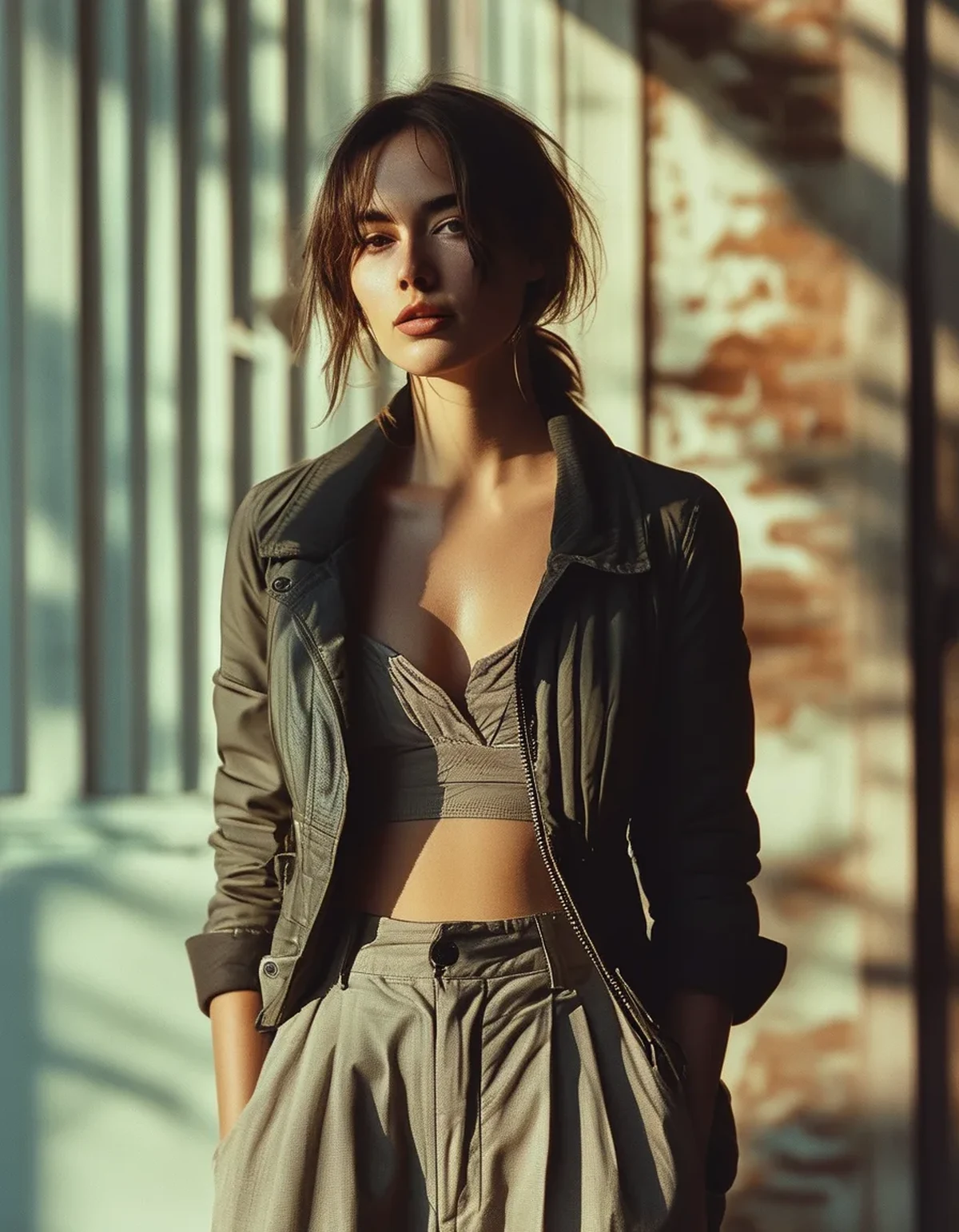
Because sometimes the coat you want is the coat you want. There are ways to reduce the cost.
- Wear it open. Two long vertical lines down the front do most of the work that the hem undoes.
- Match the coat to the trousers in colour. If there is no contrast at the coat’s hem, the boundary weakens considerably and the eye reads a continuous column.
- Choose a narrow silhouette. A slim long coat reads as a vertical; a full one reads as a shape.
- Add a strong vertical inside it — a long scarf hanging in two lines, a column of one colour underneath.
- Raise the visible waist inside the coat. A belt at the natural waist over a knit, visible when the coat is open, gives the eye a higher reference to use.
- Keep the shoulder correct. A dropped shoulder on a long coat is the combination that most reliably overwhelms a smaller frame. Shoulder seam at the shoulder point is the non-negotiable.
- Show some ankle where the weather allows. It extends the visible leg beyond the coat’s influence.
And the rule for the in-between lengths, if you own one and like it: shorten it. Taking a mid-hip jacket up to the hip bone is a straightforward alteration on most unlined and many lined jackets, and it converts an item you avoid into one you reach for.
What about cardigans?
Same rules, weaker effect, because knit drapes rather than holding a line. A long open cardigan behaves much like an open coat and is a reliable option.
What should I be doing about this right now, seasonally?
Autumn is the season when this rule matters most, and the shopping window is open now.
Coats are the dominant garment for the next six months. Whatever you buy in the next few weeks will be the outermost horizontal line in almost every outfit until spring. It is worth more attention than any other single purchase in the year.
Specifically, over the next few weeks:
- Try coats on over the clothes you actually wear, not over a summer top. Bulk underneath changes where the hem falls and how the shoulder sits.
- Check the hem against your widest hip point, first, before assessing anything else about the coat.
- Prefer either cropped-to-waist or genuinely long. Skip the mid-hip category entirely and you will avoid most of the problem.
- Check that the shoulder seam sits at your shoulder, since this is the alteration that cannot be made.
- Buy the coat in a colour that matches your most-worn trousers if you want the maximum effect from a long one.
- Have last year’s mid-length jacket shortened now, while the tailor is not yet busy with the autumn rush.
And a note about the transitional weeks specifically: the light jacket you reach for in September and October is worn over less bulk, so its hem line is cleaner and more visible than a winter coat’s. The proportion rules are at their most visible right now, which makes this a good moment to look honestly at what you own.
Is there a length that works for absolutely everything?
Hip bone length, in a matched or neutral colour, worn open. Not the most lengthening option available, and the one that fails least often.
FAQ: Petite Jacket Length Questions, Answered
How do I find my widest hip point?
Stand side-on to a mirror in fitted clothing. It is usually somewhere between 18 and 23 centimetres below the natural waist, and it varies more than people expect.
Can jackets be shortened?
Unlined and simply lined jackets, usually yes and affordably. Jackets with pockets or vents near the hem are harder and sometimes not worth it.
Does this apply to blazers worn as tops?
Yes, and more strongly, because there is no coat over them to override the line.
What about puffer jackets?
The same length rules, with an added volume consideration. A cropped puffer is far more forgiving on a petite frame than a mid-length one.
Should the jacket sleeve length change anything?
Sleeve length does not affect leg line but it strongly affects whether the jacket reads as fitted. A too-long sleeve makes any jacket look borrowed.
Is a belted coat a good idea?
Only if the belt sits at your natural waist. On many standard coats it sits lower, which creates a strong horizontal at exactly the wrong height.
TL;DR:
- The eye reads the leg as starting at the lowest clear upper-body boundary — usually the outermost layer’s hem, not the waistband.
- A high-rise trouser is wasted under a jacket that redraws the line lower.
- Cropped-to-waist works. Hip bone works. Genuinely long works. Mid-hip at the widest point is the worst length available.
- Wear long coats open — two vertical lines beat one horizontal hem.
- Match the coat colour to the trousers to weaken the hem boundary.
- Shoulder seam at the shoulder point is the one thing that cannot be altered.
- Buy autumn coats now, try them over real layers, and get last year’s mid-length jacket shortened.
You can optimise everything below the waistband and lose it all to one hem sitting eight centimetres too low.
Keep Reading
This article is for general informational and styling purposes only. Fit, sizing, and product availability may vary.
