Why Hem Width Changes a Petite Leg Line More Than Hem Length
Quick Answer: The eye judges leg length partly by how the leg tapers. A hem that narrows toward the ankle produces a continuous line that reads long; a wide, blunt hem creates a horizontal terminus that stops the eye early. On a petite frame the effect is amplified because the hem occupies a larger share of the visible leg. A hem opening around 13 to 17cm typically reads longest; above roughly 22cm the taper is lost unless the trouser is genuinely full and floor-length.
You hemmed them to exactly the right length.
They still make your legs look shorter than the pair you never altered.
The length was right. The width was doing the damage.

Why does hem width matter so much?
Because it determines whether the leg line ends in a point or a wall.
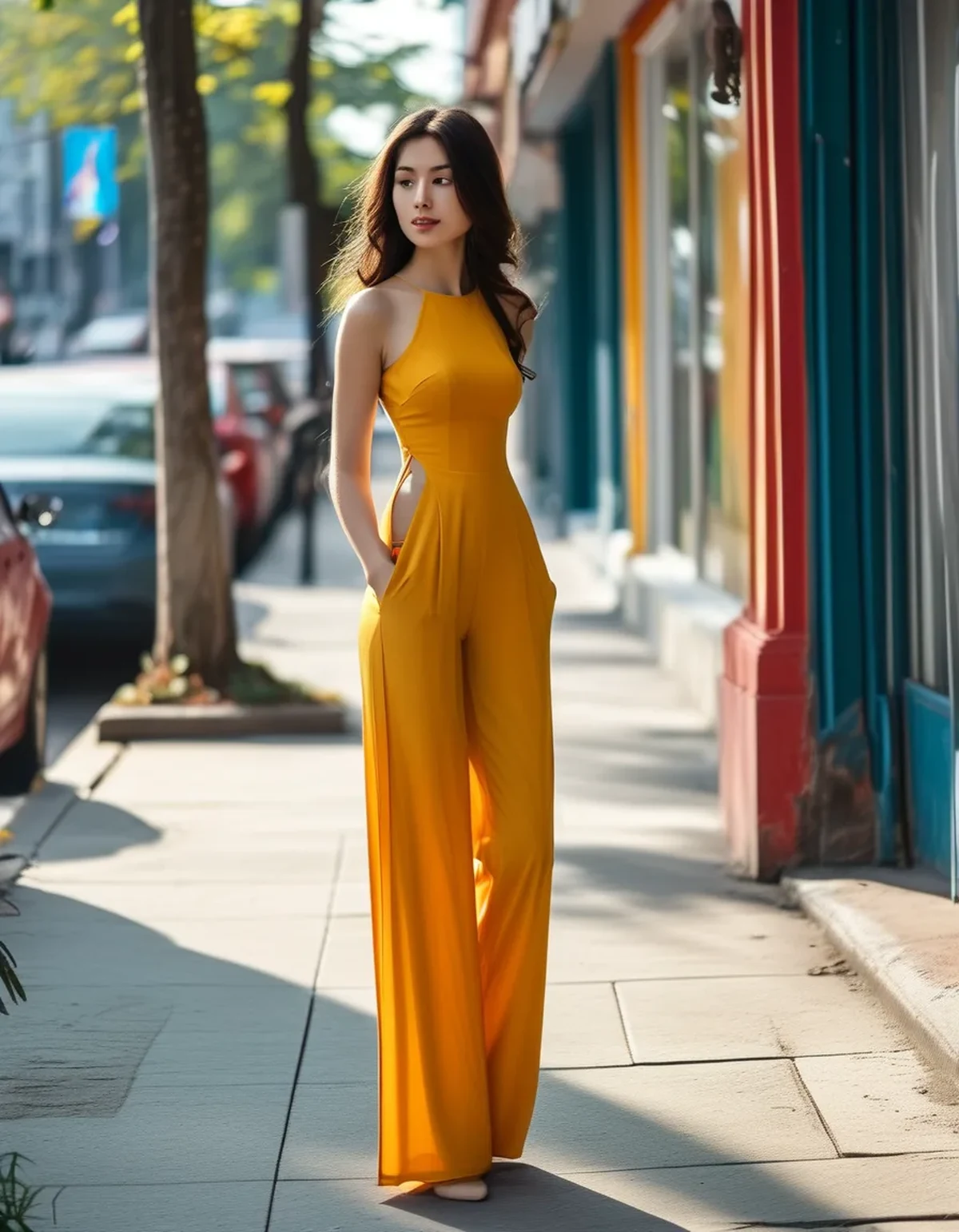
Taper creates implied continuation. A narrowing line suggests it keeps going beyond where it ends. This is a basic perspective cue, and it is why tapered trousers read longer than they measure.
A wide hem is a horizontal. A blunt, wide opening draws a strong horizontal across the leg, and horizontals stop the eye. It becomes a full stop rather than a fade.
Petite frames have less leg to spare. The same 8cm of hem width occupies a larger proportion of a shorter leg, so both the benefit of taper and the cost of width are magnified.
Fabric weight decides whether width collapses. A heavy wide-leg trouser hangs in a clean column, which works. A lightweight one flares outward, which does not.
Shoe visibility depends on it. A narrow hem lets the shoe show, extending the visual line onto the foot. A wide hem covers the shoe and truncates the line at the fabric edge.
And width interacts with rise. A high rise plus a tapered hem is the strongest lengthening combination available. A low rise plus a wide hem is the weakest.
What widths actually work?
There are usable numbers here, and almost nobody measures them.
13 to 17cm hem opening. For most petite frames this is the range that produces a clear taper without looking skinny-fit. Measure flat across the hem and double it, or just measure the circumference.
18 to 21cm is neutral. A straight leg. Neither lengthening nor shortening, and a safe default.
Above 22cm needs commitment. Wide legs work on petite frames, but they require a high rise, a heavier fabric and a hem that reaches close to the floor with a heel. Half-measures in this range are where the leg line dies.
Cropped plus wide is the worst combination. A wide hem ending at mid-calf creates a strong horizontal at the widest part of the lower leg, on the shortest available section of leg.
Cropped plus narrow is excellent. An ankle-grazing tapered trouser shows the narrowest part of the leg and the whole shoe, which is why it works so reliably.
Measure your existing wardrobe once. Take a tape to the trousers you feel best in and the ones you never wear. The width difference is usually obvious and usually explains everything.
How do you adjust what you already own?
Tapering is one of the cheapest and most transformative alterations available.
Tapering from the knee down is a standard, inexpensive alteration. It typically costs less than a hem plus a hem and changes the garment more.
Taper before you shorten. Shortening a wide trouser makes the hem proportionally wider relative to the visible leg. Tapering first often means you need less length removed, or none.
Ask for the opening measurement explicitly. Say the number you want rather than saying slimmer. A tailor cannot read your intention, and 15cm is unambiguous.
Keep the taper gradual. A taper that starts at the knee reads natural. One that starts at the calf creates a visible kink.
Cuffing is a temporary version. A single narrow cuff both shortens and narrows the visible hem, which is why a cuff sometimes lengthens the leg and sometimes shortens it. Narrow cuffs lengthen; deep ones shorten.
Autumn note: the season pushes everyone toward heavier fabrics and boots, and both change the calculation. A heavier trouser holds a wide leg better, but a boot under a narrow hem can bunch badly. If you are buying autumn trousers, take the boots to the shop, because hem width that works over a trainer often fails over a boot shaft.
What Nobody Tells You About Hems and Leg Line
A wide hem covering the shoe removes several centimetres of visual leg. The shoe reads as part of the leg line when visible and as a separate object when hidden.
Skinny is not the same as tapered. Tapered means narrowing; skinny means fitted throughout. A tapered trouser with room at the thigh is more flattering than a skinny one on most petite frames.
Hem width affects apparent ankle size. A narrow hem next to the ankle makes the ankle read slimmer by contrast. A wide hem removes the comparison entirely.
Fabric stiffness matters as much as width. A stiff 20cm hem holds a column; a soft one collapses into a flare and reads wider than it measures.
Petite ranges rarely adjust hem width. They shorten. Which means an off-the-rack petite trouser frequently has a wide hem on a short leg — precisely the worst combination — and it is why so many petite trousers disappoint despite being the right length.
And the practical one: most people own one pair that always works and cannot say why. Measure its hem. That number is your number, and you can shop and alter to it from now on.
FAQ: Hem Width and Petite Proportion, Answered
How do I measure hem opening?
Lay the trouser flat, measure straight across the hem, and double it for circumference. Compare like with like.
Are wide-leg trousers off-limits for petite frames?
No, but they need a high rise, heavier fabric and near-floor length with a heel. Cropped wide legs are the combination to avoid.
Is tapering expensive?
Usually comparable to a hem, and it changes the garment more. It is the best-value alteration for petite proportion.
Should I taper jeans too?
Yes, and it is one of the most common alterations tailors do. Denim tapers cleanly.
Does hem width matter for leggings?
Less, because leggings are already tapered by construction. It matters most for trousers, jeans and joggers.
What if I like the wide-leg look?
Wear it, and support it with a high rise, a heel and near-floor length. The look works; the half-measure version does not.
TL;DR:
- Taper implies continuation; a wide, blunt hem is a horizontal full stop.
- 13 to 17cm hem opening reads longest on most petite frames; 18 to 21cm is neutral.
- Cropped plus wide is the worst combination; cropped plus narrow is among the best.
- Taper before you shorten, and give your tailor a number, not an adjective.
- Petite ranges shorten but rarely narrow, which is why off-the-rack petite trousers often disappoint.
Measure the hem of the trousers you always reach for. That single number will change how you shop.
See It in Motion
Seen here: High Waist Embossed Yoga Leggings with Side Pockets — shop it on bubblelime.com
Keep Reading
This article is for general informational and styling purposes only. Fit, sizing, and product availability may vary.
