Why a Shorter Rise Can Actually Shorten the Leg Line on a Petite Frame
Quick Answer: On a petite frame, a low or mid-rise pant sits closer to the hip, which visually shortens the torso-to-leg ratio and, combined with a proportionally shorter overall leg length, can make the leg line read shorter rather than longer — a higher rise, by contrast, elongates the visible torso line and shifts the visual leg-start point higher, which paradoxically makes the leg look longer despite covering more of it.
The instinct to choose a lower rise for a longer-looking leg is based on proportion math that doesn’t actually hold up the same way on a petite frame.
Why would a lower rise actually shorten the visual leg line instead of lengthening it?
A lower rise sits closer to the hip bone, which visually compresses the torso section and, on a frame that already has proportionally less overall leg length to work with, doesn’t leave enough uncovered leg below the waistband to create a genuinely lengthening effect. The eye reads the visible leg length starting from the waistband, and a lower rise starting point paired with a shorter overall leg doesn’t provide the same lengthening runway a taller frame’s proportions allow.
How does a higher rise actually create a longer-looking leg line by covering more of the leg?
A higher rise elongates the visible torso line up to the natural or above-natural waist, and this elongated torso segment shifts the visual “leg starts here” point higher on the body, which the eye interprets as a longer overall leg line even though less bare leg is technically shown. This is a well-established styling principle — visual leg length depends on where the leg appears to start, not strictly on how much skin is shown.
Does this mean low-rise styles should be avoided entirely on a petite frame?
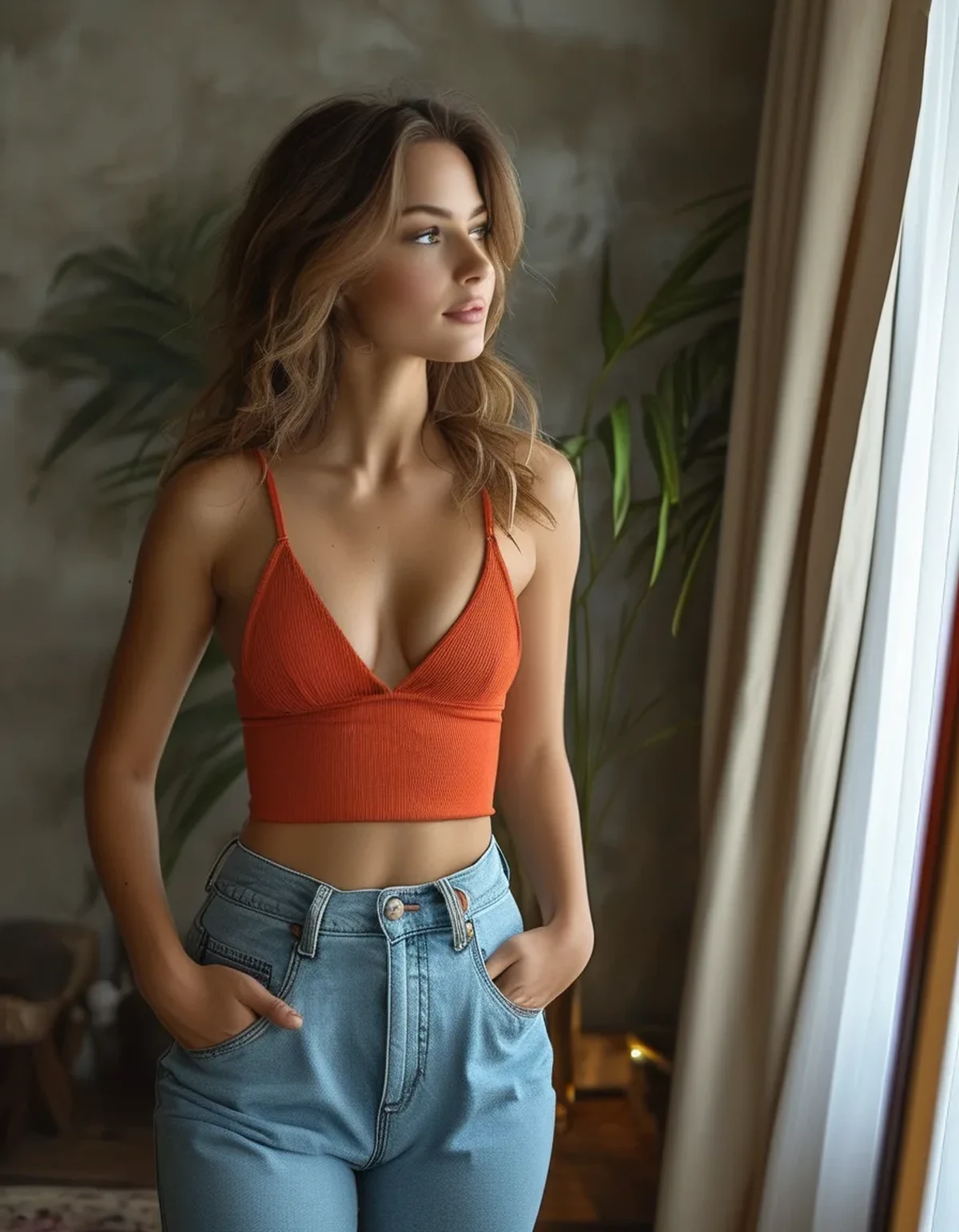
Not entirely, but it’s worth being intentional — a low-rise style paired with a cropped or fitted top that itself extends the visual torso line partially compensates, while a low-rise paired with a longer, looser top that further shortens the visible torso compounds the shortening effect. Choosing a high-rise style as the default, more reliable option removes the need for this extra compensating coordination.

Is there a specific rise height that works best, or does it vary significantly by individual proportion?
A true high rise, sitting at or slightly above the natural waist, most reliably produces the leg-lengthening effect for most petite frames, though individual torso-to-leg ratio does still create some variation in exactly how pronounced the effect is. Trying on a genuinely high-rise style against a low or mid-rise version of a similar pant is the most reliable way to confirm the effect on an individual frame.
Myth vs Fact: Rise Height and Leg Length on a Petite Frame
Myth: A lower rise always shows more leg and therefore looks more leg-lengthening. Fact: Showing more leg and looking leg-lengthening are different things — a higher rise shifting the visual “leg start” point higher often lengthens the look more effectively.
Myth: Rise height matters mainly for comfort, not for visual proportion. Fact: Rise height is one of the most significant single factors in perceived leg length, particularly on a petite frame.
FAQ: Rise Height and Leg Length, Answered
Does this same rise-height effect apply to non-petite frames as well?
The general principle applies broadly, but the effect is often more pronounced and noticeable on a petite frame specifically, since there’s proportionally less leg length to work with in the first place.
Do wide-leg and straight-leg silhouettes respond to this rise effect the same way as skinny or legging styles?
The rise-height effect on visual leg start point applies across silhouettes, though a straight or slightly flared leg opening tends to compound the lengthening effect further, regardless of rise height.
Is it worth tailoring a lower-rise favorite piece to sit higher, or is that not really possible?
Rise height generally isn’t something that can be meaningfully altered by a tailor without significant reconstruction, so choosing the right rise height at purchase is more practical than planning to alter it later.
TL;DR:
- A lower rise on a petite frame shortens the visible torso and doesn’t provide enough leg runway to lengthen
- A higher rise shifts the visual leg-start point higher, which reads as a longer leg despite covering more skin
- Low-rise styles can still work with intentional top-length coordination, but require more active styling effort
- A true high rise at or above the natural waist most reliably produces the leg-lengthening effect
Choosing a higher rise on a petite frame isn’t a compromise — it’s the more reliable proportion choice for actually achieving the longer leg line a lower rise often fails to deliver.
Keep Reading
This article is for general informational and styling purposes only. Fit, sizing, and product availability may vary.
