Pointed Toe vs Round Toe: The Petite Leg Line Math Nobody Explains
Quick Answer: A pointed toe extends the visual line of the leg beyond the foot, effectively borrowing length from the shoe. The effect is worth roughly half an inch to an inch of perceived leg length, but only when the shoe color is close to the leg or hem color and the vamp is low enough to expose the top of the foot. A pointed toe in a contrasting color with a high vamp gains nothing.
The pointed shoe is treated as a rule. It is actually a conditional, and most people are only meeting one of the three conditions.

Why does a pointed toe lengthen the leg at all?
Because the eye completes lines, and a tapering shape reads as a continuation rather than a termination.
A round toe presents a blunt horizontal edge at the end of the foot. The eye stops there. A pointed toe narrows gradually to a point, and the visual system extends the implied line past where the shoe actually ends, which is the same principle behind why a tapered trouser leg reads longer than a straight one at identical length.
That is the entire mechanism, and it explains the conditions. Extension only works if the eye reads the shoe as part of the leg. The moment the shoe becomes a separate object, the taper is just a shape on a different item and contributes nothing to the leg.
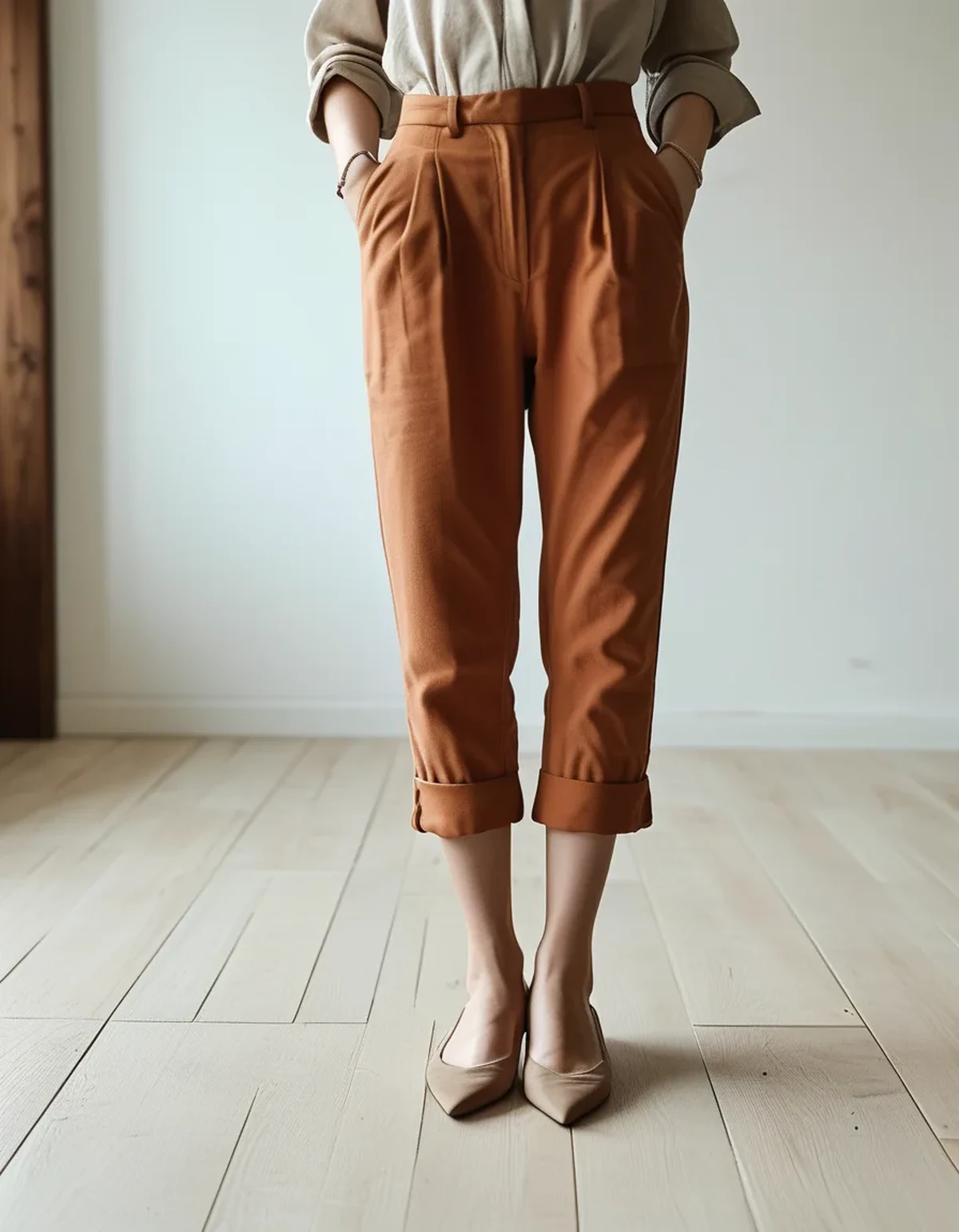
Which means color continuity is not a nice extra. It is the precondition. A nude or leg-matching pointed flat lengthens substantially. A black pointed flat under a light trouser is two objects, and the taper is decoration.
What are the three conditions?
1. Color proximity. The shoe should be close to either the hem color or the skin tone. Not identical, close. A shoe within a shade or two of the trouser continues the column; a shoe matched to bare skin continues the leg.
2. A low vamp. The vamp is how high the shoe cuts across the top of the foot. A low vamp exposing the toe cleavage and the top of the foot adds visible length to the foot-and-leg unit. A high vamp cuts a horizontal line across the foot, which is a stopping point placed even lower than the ankle and therefore worse.
3. No competing horizontal. An ankle strap, a contrasting sock, or a hem that lands at the widest part of the ankle will override the toe shape entirely. The taper cannot rescue a line that has already been cut two inches above it.
Meet all three and the effect is real and noticeable. Meet one and you have bought a pointed shoe for no reason, which is most of what happens.
How much length is actually gained?
Roughly half an inch to an inch of perceived leg length, depending on how sharp the point is and how well the conditions are met.
That sounds small, and on a petite frame it is not. On a 30-inch inseam, an inch is over three percent, and proportion effects operate on ratios rather than absolute measurements. The same inch on a tall frame is genuinely negligible, which is part of why this advice is aimed at petite styling specifically.
The comparison worth making: a pointed nude flat with a low vamp and a cropped trouser produces a longer leg line than a round-toe black pump with a two-inch heel under the same trouser. The heel adds real height and then spends it on a visual stop.
Sharpness matters, but with diminishing returns and increasing discomfort. A moderately tapered almond toe captures most of the effect. An extremely sharp point captures slightly more and costs you the ability to walk for three hours, which is a bad trade for a quarter inch.
5 Mistakes That Cancel the Pointed Toe
1. The pointed shoe with a thick contrasting sock. Discussed everywhere and still the most common one. The sock band is a hard stop above the shoe, so the toe shape below it is irrelevant.
2. The high-vamp pointed flat. Extremely common in loafers and some ballet flats. The shoe covers the foot to the base of the toes, creating a horizontal at the foot’s widest point. Pointed and shortening at the same time.
3. The pointed boot with a cropped pant. If the boot shaft ends mid-calf and the hem ends above it, the leg has been divided into three segments. The point at the end of a segment does not lengthen the whole.
4. Assuming nude means beige. Nude means close to your own skin tone. A beige shoe against a deeper skin tone is as much of a contrast as a white one and creates the same break. The shoe has to disappear into the leg to work.
5. Buying a size too small because the point adds length. The point is empty space beyond the toes, which means pointed shoes need the same fit at the ball of the foot as anything else. Sizing down puts your toes into the taper and the shoe becomes unwearable.
The one that reframes it: a round toe in the right color beats a pointed toe in the wrong one. Color continuity does more work than shape does, so if you can only get one condition right, get that one.
When should you skip the pointed toe entirely?
When the outfit is already long-lined and the shoe is the only place with visual interest, and when the day genuinely requires walking.
An all-monochrome outfit with a matching pointed shoe can read as unbroken to the point of being flat. A round or square toe in the same color provides a small terminal detail without cutting anything, and the outfit gains definition at almost no proportional cost.
The practical case matters too. Pointed shoes concentrate pressure at the forefoot and, in narrow lasts, compress the toes laterally. If the day involves real distance, choose an almond toe with the same color strategy and accept the marginal difference.
And with wide-leg trousers that fully cover the shoe, toe shape is simply not visible. Spend the decision elsewhere, because the hem is doing all the work and the shoe is a comfort choice.
FAQ: Shoe Shape and Leg Line Questions, Answered
Does this apply to sneakers?
Partly. Sneakers are almost always round or oval and have high vamps, so the toe shape lever is unavailable. Color continuity still works, which is why a sneaker matched to the trouser reads longer than a contrasting one regardless of shape.
Is an almond toe a real compromise or a marketing term?
A real compromise. An almond toe captures most of the taper effect with a wider toe box, and for most people it is the correct default for anything worn more than two hours.
What about square toes, which are everywhere right now?
A square toe creates a deliberate horizontal edge, so it is the shortening option. That can be a valid style choice, but it is working against the leg line rather than with it. If you love them, compensate with a higher rise and strong color continuity above the shoe.
TL;DR:
- A pointed toe extends the implied line of the leg, worth roughly half an inch to an inch
- It only works with color proximity, a low vamp, and no competing horizontal above it
- Color continuity matters more than shape; a matched round toe beats a contrasting point
- An almond toe captures most of the effect without the discomfort
Check the vamp before you check the point. A pointed shoe that covers your whole foot is a round shoe wearing a costume.
Keep Reading
This article is for general informational and styling purposes only. Fit, sizing, and product availability may vary.
