The Inseam Math That Actually Explains Petite-Framed, Long-Legged Proportions
Quick Answer: “Petite” sizing is based on overall height, not leg-to-torso ratio — someone under 5’4” with a proportionally longer leg and shorter torso can have a genuinely long inseam relative to their height, which standard petite cuts (built for a shorter torso and shorter leg together) don’t account for.
Petite sizing assumes a specific proportion pattern, and if your body doesn’t match that specific pattern, the standard fix doesn’t actually fix anything.
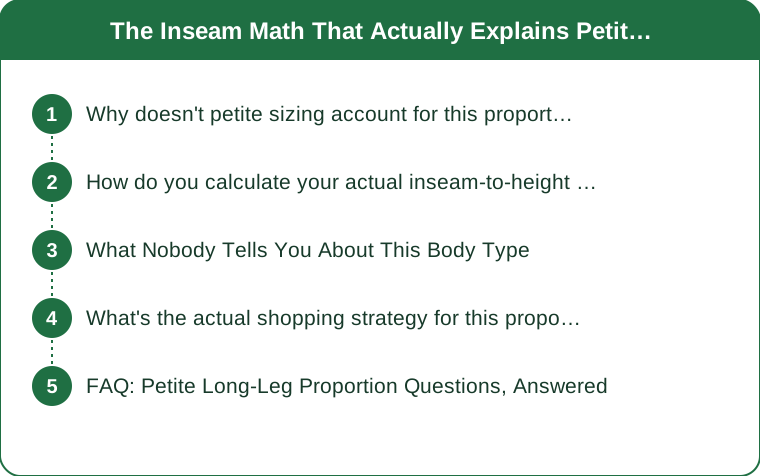
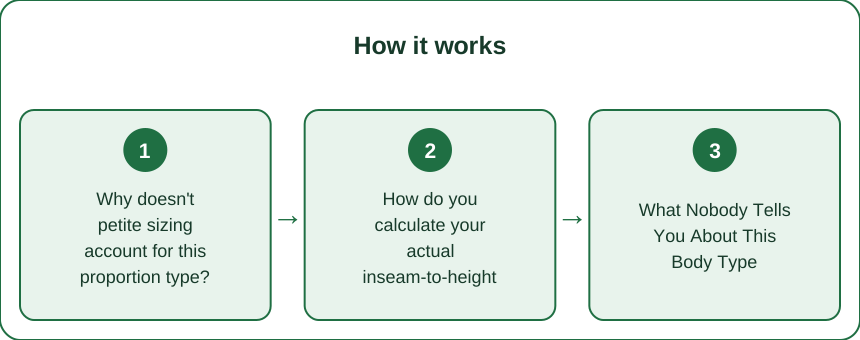
Why doesn’t petite sizing account for this proportion type?
Sizing categories are built around height as a single number, not the ratio between torso and leg length that actually varies independently of height. Two people can be the exact same height with meaningfully different leg-to-torso splits — petite sizing assumes a specific average pattern (shorter torso, shorter leg, proportionally) that doesn’t hold for everyone under the height cutoff.
This is why a petite-labeled pant can still run short in the rise (torso) but long in the leg, or the reverse, depending on which pattern the brand actually cut.
How do you calculate your actual inseam-to-height ratio?
Measure your inseam (crotch to floor) and divide by your total height. A ratio significantly above roughly 0.45 suggests proportionally longer legs relative to your height — meaning even at a petite overall height, you may need a regular or tall inseam length, just paired with a shorter rise and torso fit.
This single calculation explains far more fitting-room frustration than “petite vs. regular” ever will on its own, since it isolates the actual variable causing the mismatch.

What Nobody Tells You About This Body Type
Many petite-framed, longer-legged people spend years assuming they’re simply “hard to fit” without realizing the actual mismatch is specific and nameable — it’s not that petite sizing is wrong, it’s that it solves for a different, more common proportion pattern than theirs.
Once you know your inseam ratio, shopping becomes dramatically more targeted: look for regular-length inseams with a petite or short rise, rather than defaulting to the petite category and being confused when it still runs short in the leg.
What’s the actual shopping strategy for this proportion?
Prioritize brands that sell rise and inseam separately, or that offer a “petite” cut specifically defined by rise rather than overall length — this is a small but growing category. Tailoring is also genuinely worth the investment here: a regular-length pant taken in at the waist/rise by a tailor often fits far better than any off-the-rack petite option.
High-rise styles in particular can help, since a higher rise effectively shortens the torso portion of the pant without touching leg length at all.
FAQ: Petite Long-Leg Proportion Questions, Answered
Is this proportion type actually common?
It’s less common than the “petite = shorter everywhere” pattern brands design for, but far from rare — proportion varies independently of height more than most sizing systems account for.
Should I size up or down to fix a short-in-the-leg petite pant?
Sizing up or down in the same petite cut won’t fix a proportion mismatch — you need a different inseam category (regular/tall) paired with rise adjustment, not a different size number in the same cut.
Is tailoring really worth it over just buying more brands to try?
For frequently worn pieces (work pants, everyday denim), tailoring a well-fitting-elsewhere regular pant is often more cost-effective long-term than repeatedly buying and returning petite options that don’t solve the actual mismatch.
TL;DR:
- Petite sizing solves for overall height, not the actual leg-to-torso ratio
- Calculate inseam ÷ height — above ~0.45 suggests proportionally longer legs
- Look for regular inseam length paired with a petite or shorter rise, not petite-everything
- Tailoring a well-fitting torso in a regular-length pant often beats repeated petite purchases
Keep Reading
This article is for general informational and styling purposes only. Fit, sizing, and product availability may vary.
